Injection molding is one of the most common processing methods in the plastics industry. However, new manufacturers with limited experience can easily encounter errors during the production process. As one of Vietnam's leading suppliers of plastic raw materials and additives, we will share some common defects in injection molded plastic products, along with their causes and solutions, in this article.
I. Overview of the Plastic Injection Molding Process
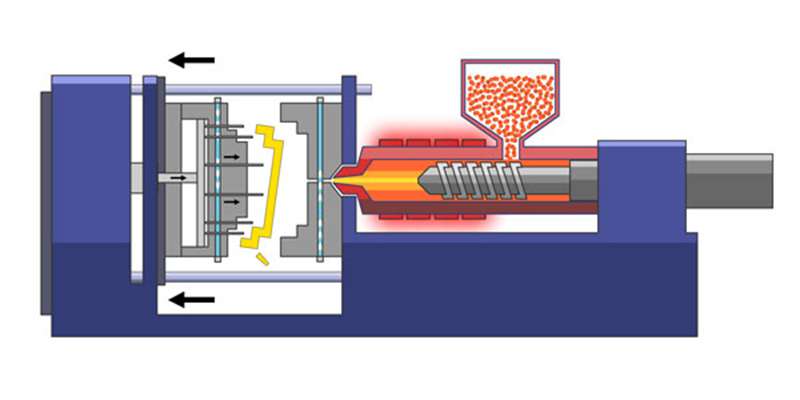
Injection molding is a widely used manufacturing process where molten material is injected into a mold cavity to create a part or product.
The injection molding process begins with the material being heated to a molten state. Once the material is melted, it is injected into the mold cavity at high pressure. The material then cools and solidifies within the mold. After the part cools and solidifies, it is ejected from the mold, producing the finished product.
There are several key components involved in the injection molding process:
- Mold – a hollow cavity used to shape the material.
- Injection unit – responsible for heating and injecting the material into the mold.
- Clamping unit – holds the mold in place and applies pressure to keep it closed during the injection process.
Injection molding offers numerous advantages, including the ability to create complex shapes with high precision and repeatability. It is a cost-effective manufacturing process, especially for large-scale production runs.
II. Common Defects in Injection Molded Plastic Products
1. Sink Marks
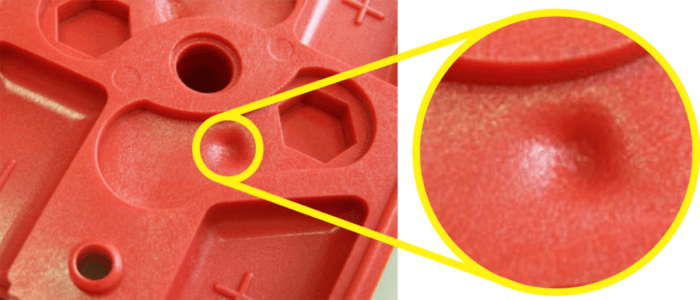
Sink marks are depressions on the surface of injection molded plastic products, often caused by material shrinkage or improper molding conditions. These marks are more common in thicker sections of the product.
Sink marks can significantly affect the aesthetic appeal of the product, making it appear uneven or flawed. In terms of performance, sink marks can compromise the structural integrity of the product, leading to potential weak points or failures.
To avoid sink marks, manufacturers must ensure:
- Designing uniform wall thickness throughout the product or placing injection gates in areas with higher thickness.
- Reducing mold temperature.
- Reducing injection speed and pressure can also help minimize the appearance of sink marks.
- Using mold flow analysis software can assist in optimizing designs to reduce sink marks.
2. Weld Lines
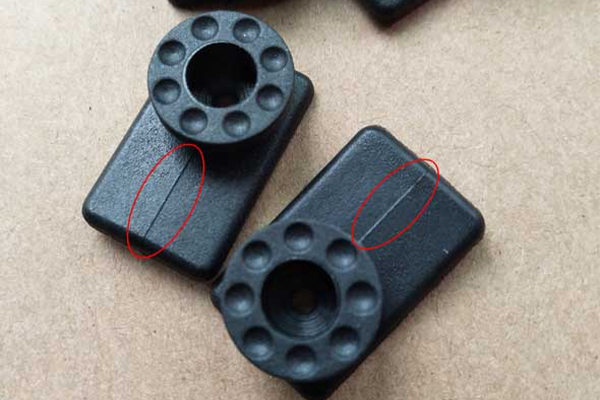
Weld lines are lines or seams formed when two melt fronts from different directions meet but do not fully coalesce.
Weld lines can weaken the structural integrity of the product, making it susceptible to failure or breakage at this location. They can also impact the product's external appearance, leading to an aesthetically unappealing finish.
To prevent weld lines, it is recommended to:
- Design molds that minimize obstacles causing multiple melt fronts.
- Design appropriate gate locations.
- Increase melt temperature and mold temperature.
3. Flash
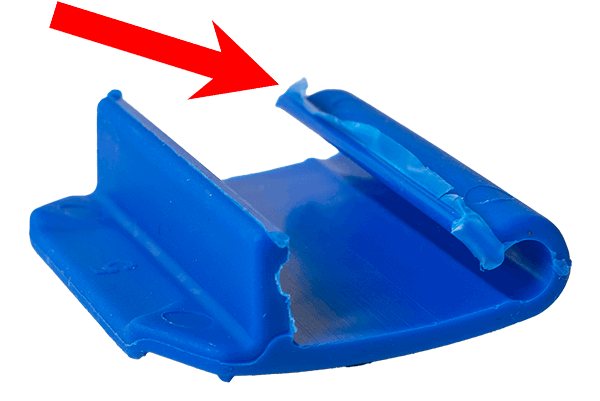
Flash refers to excess material that escapes the mold cavity during injection molding, resulting in thin protrusions or fins on the edges of the product.
Flash can occur due to issues such as excessive injection pressure, worn molds, improper clamping force, or poor mold alignment.
Prevent flash by reducing injection pressure, performing regular mold maintenance, and ensuring proper clamping force and alignment. Post-processing techniques such as trimming or deburring can be used to remove excess material from the final product.
4. Warpage
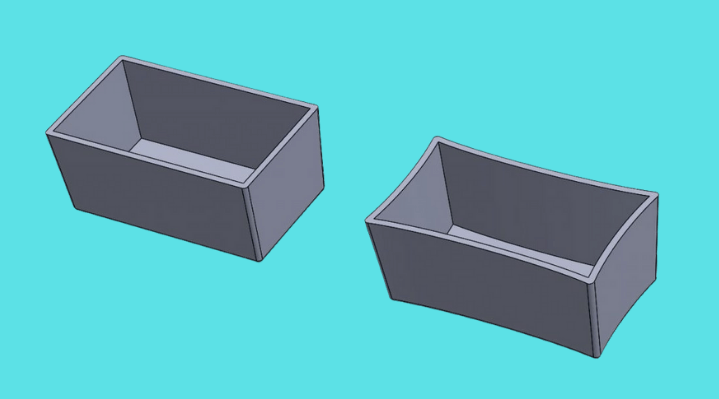
Warpage is the distortion of a plastic product from its original design shape, often caused by uneven material cooling, residual stress, or improper mold design.
Warpage can lead to dimensional inaccuracies, ill-fitting parts, and a reduction in overall product quality. It can also affect the functionality and performance of the product.
To minimize warpage, the following methods can be tried:
- Design uniform wall thickness.
- Place gates appropriately.
- Add reinforcing ribs.
- Increase cooling time.
5. Short Shots
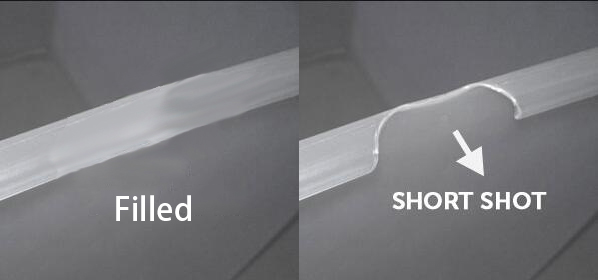
A short shot occurs when the mold cavity is not completely filled during injection molding, resulting in incomplete parts. This can happen due to insufficient material, inadequate injection pressure, or trapped air.
To avoid short shots by:
- Increasing pressure and temperature.
- Properly venting the mold.
6. Burn Marks
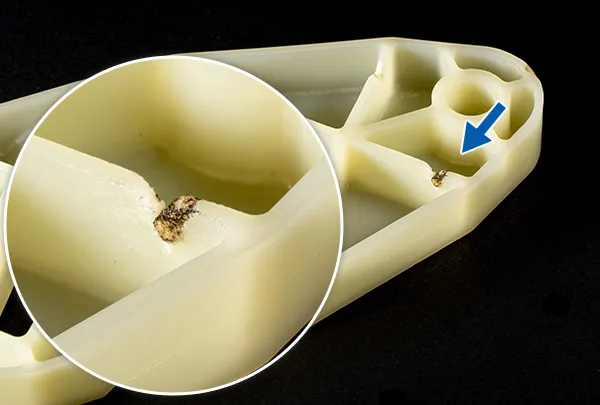
Burn marks are dark or discolored areas on the surface of injection molded plastic products, often caused by overheating material or poor venting in the mold. Burn marks can result from excessively high injection speed, high melt temperature, prolonged residence time, or insufficient mold cooling.
Prevent burn marks by optimizing melt temperature, injection speed, and pressure to avoid overheating the material. Proper mold venting, adequate cooling, and using materials with higher thermal stability can also help prevent burn mark formation.