Currently, plastic is present in almost all fields, from daily life to manufacturing. Products made from plastic are diverse and come in many eye-catching colors. However, the original raw material for plastic products, virgin plastic, is colorless, transparent, or white. So, how can plastic products be colored? Let's explore 2 popular color mixing solutions in the plastics industry in this article!
Solution One: Pigment Powder
This is a type of industrial pigment powder specifically used for the plastics industry. It is synthesized from chemical substances and ground into a powder. The powder is mixed with the main raw materials during the production process to color the product.
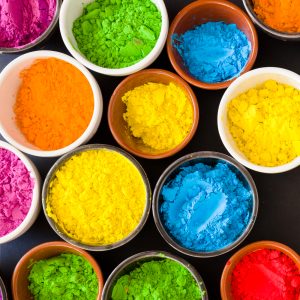
Pigment powder used in the plastics industry has the following general characteristics:
- Being in powder form, it is very dusty and does not fully disperse during the coloring process.
- Low cost, does not affect the properties of the colored product.
- Easy to process, can be used for all types of plastics.
- Requires precision when measuring pigment powder, otherwise, color deviation is very likely.
Pigment powder is divided into 2 main types: inorganic pigment and organic pigment. Besides, there are some other types of pigments with special effects.
Inorganic Pigment
Inorganic pigments are made from insoluble metal salts or colored metal oxides. Inorganic color compounds include synthetic inorganic pigments, natural inorganic pigments, and natural inorganic colorants. Inorganic pigments include white pigment (Titanium dioxide), black pigment (Carbon Black), and other colors.
Inorganic pigments are more widely used than organic pigments due to the following advantages:
- Resistant to strong light conditions.
- Resistant to weather effects.
- Good heat resistance.
- Solvent resistant.
However, due to their high refractive index, inorganic pigments have less vibrant, duller colors and weaker color intensity.
Organic Pigment
Each type of organic pigment has a different structure. Organic pigments mainly include 3 types: azo pigments, copper phthalocyanine, and dye pigments.
Organic pigments have bright, transparent colors, high alkali and acid resistance, and stable temperatures. However, their weather resistance, light fastness, and solvent resistance are poorer than those of inorganic pigments.
Special Colors
Besides the two basic types of pigments, there are some other special pigments used in specific cases.
Fluorescent Pigment – Capable of transforming UV light into visible color. Due to its very high light reflectivity, it makes colors more vibrant and eye-catching. Often used in toys and packaging.
Pearlescent Pigment – Has a thin flake structure coated with titanium dioxide, reflecting part of the light to create a shiny, glossy appearance for the product.
Metallic Pigment – Has a fine aluminum flake structure evenly dispersed in the product, creating a shimmering metallic look for the product.
Solution Two: Color Masterbatch
This is a compound specifically used to color plastics. Color masterbatches are prepared from pigment powder, virgin plastic, and other additives through a process of melting, mixing, and then extruding into pellets.
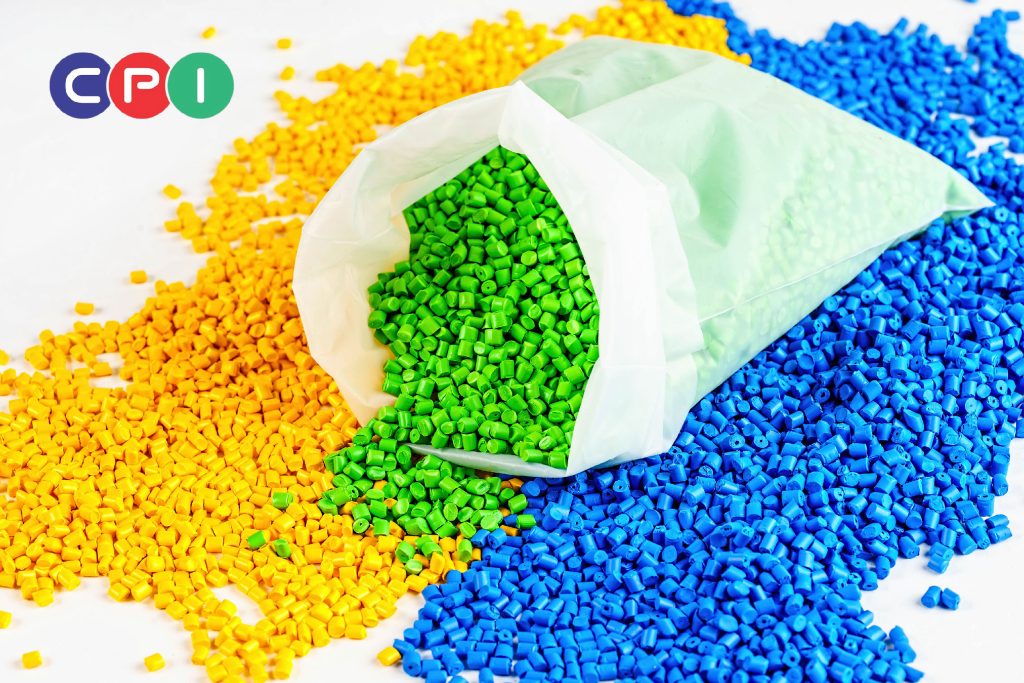
This is the most popular method for coloring plastics due to its outstanding advantages such as:
- High color dispersion.
- Accurate color creation.
- High color fastness.
- Easy to store and transport.
Color masterbatch can be directly mixed into the plastic blend during the production process. Since the color masterbatch mixture contains plastic and additives, it can affect the properties of the finished plastic. This can be utilized to modify the plastic's properties according to technical requirements. Thanks to these characteristics, color masterbatch is widely used in products with high quality demands.
Using color masterbatch helps optimize production costs and time. It can be directly mixed during the production process according to the manufacturer's recommended ratio to achieve the desired color product, eliminating the need for time-consuming color blending.
Color masterbatch is manufactured and distributed directly by CPI Plastic Vietnam Co., Ltd. We supply a diverse range of color masterbatches. Additionally, we consult and produce color masterbatches according to precise requirements based on the customer's sample product.
(Refer to products here: Color Masterbatch)
Above are the two most commonly used methods for coloring plastic products. We hope that this article helps you understand them better and make suitable choices for your business and plastic product manufacturing.
For purchasing inquiries, please contact Hotline: 0913.046.902 for consultation and the best quotation.