Color masterbatch is the most optimal method for coloring plastic products. In this article, we will learn about the color masterbatch production process at CPI Plastic.
Components of Color Masterbatch
Color masterbatch is made up of four basic components: color pigment (powder pigment) or dye, base resin, dispersant, and additives.
Color masterbatch is categorized into two types:
- Monochromatic masterbatch: Color masterbatch made from a specific colorant and supported by base resin, wax, or dispersant. Contains no additives.
- Custom color masterbatch: Has a specific formulation, a mixture of different pigments. Creates exact colors according to customer requirements. Additives can be included as per request.
Pigment or Dye
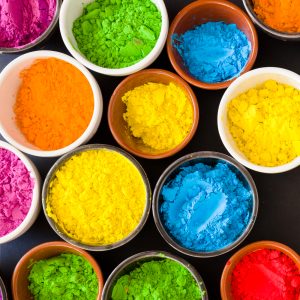
Inorganic pigments: are produced from insoluble metal salts or colored metal oxides. Inorganic color compounds include artificial inorganic pigments, natural inorganic pigments, and natural inorganic colorants. Inorganic pigments comprise white pigments (Titanium dioxide), black pigments (Carbon Black), Cadmium pigments (red, yellow), iron oxide pigments (red, yellow), and other colors.
Organic pigments: Each type of organic pigment has a different structure. Organic pigments primarily include three main types: azo pigments, copper phthalocyanine, and dyeing pigments.
| Dye | Organic Pigment | Inorganic Pigment | |
| Origin | Natural or synthetic | Synthetic | Natural or synthetic |
| Relative density | 2.0 – 3.5 | 1.2 – 2.0 | 3.5 – 5.0 |
| Solubility in organic solvents and polymers | soluble | insoluble | insoluble |
| In transparent plastics | Transparent | Translucent / Opaque | Opaque |
| Tinting strength | High | Medium | Low |
| Color brightness | High | Medium | Low |
| Light stability | Poor | Medium | Good |
| Heat stability | 170-200oC | 200-260oC | around 500oC |
| Chemical stability | Low | Medium | High |
| Migration phenomenon | High | Medium | Low |
Base Resin
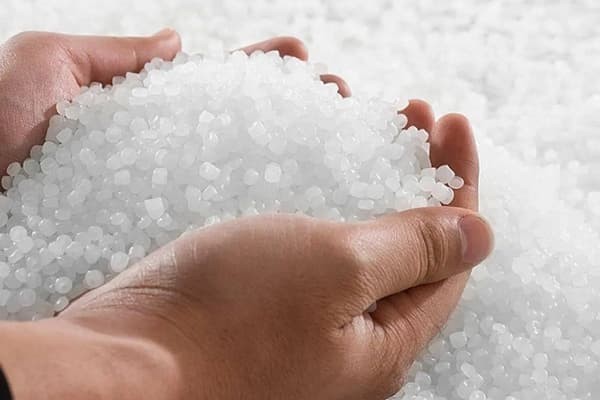
Color masterbatch typically uses PE or PP resin, as these are the two most common types of plastic. Additionally, custom-formulated color masterbatch will use the same type of resin as the product to be colored. Compatibility will be higher when using the same type of resin; however, the fluidity of the base resin can also be considered.
Dispersant
To promote uniform dispersion of pigments and prevent agglomeration, the melting point of the dispersant must be lower than the melting temperature of the resin and have good compatibility with the resin and good affinity with the pigment. Commonly used dispersants include low molecular weight polyethylene wax, stearates, etc.
Additives
Typically, color masterbatch does not contain additives. If requested by customers, common additives such as flame retardants, brighteners, antibacterial agents, antistatic agents, antioxidants, and others are often added.
Color Masterbatch Production Process
The color masterbatch production process goes through three basic steps:
- High-speed mixing of raw materials.
- Melting the mixture.
- Extruding through a die and cutting to form masterbatch pellets.
Currently, CPI Plastic produces color masterbatch using high-speed mixing and twin-screw extrusion technology.
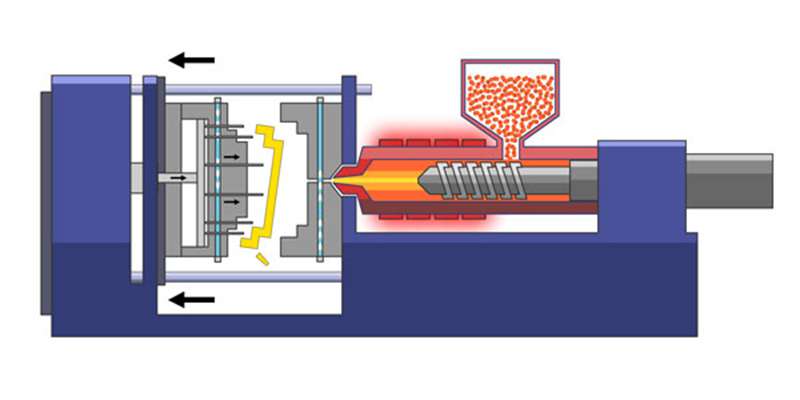
First, raw materials (including resin, dispersants, colorants, and additives) are fed into a mixer according to the formulation. The mixer processes the materials at high speed, and through high-speed action and the role of baffles, it crushes coarse pigment particles and pre-wets them with polyethylene wax (which has a relatively low melting point). It also evenly adheres to the surface of the resin particles due to friction from high-temperature stirring to create a plasticized surface. Then, the mixture is fed into a twin-screw extruder and melted. The mixture is fully mixed, ground, and dispersed, then extruded through a die to form the masterbatch product.
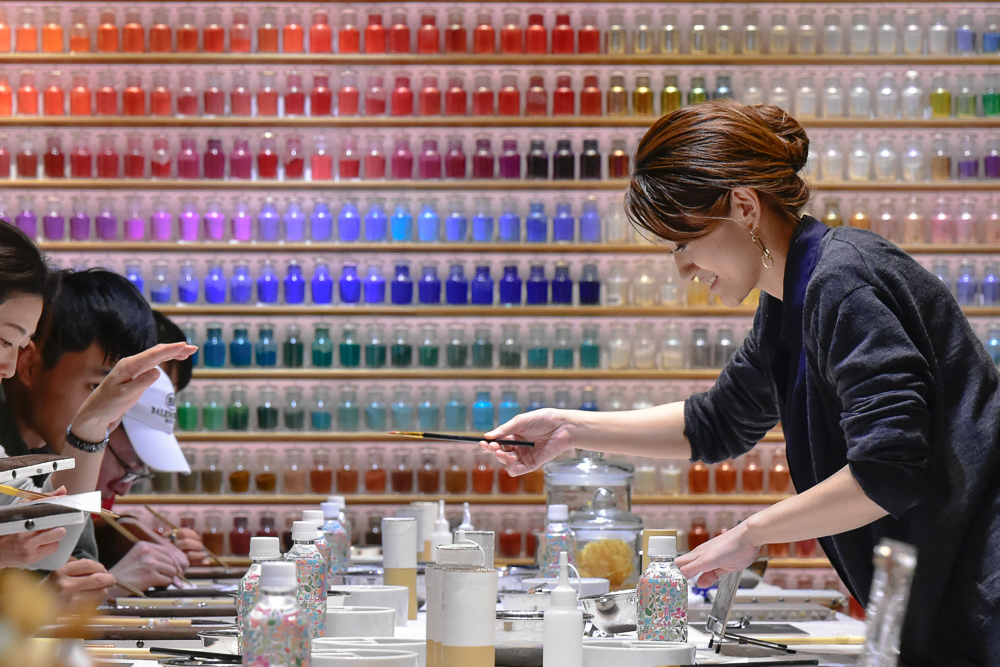
For plastic to have a uniform color, pigment particles must be refined to a certain degree and evenly distributed in the plastic. Pigment dispersion not only affects the external appearance of the colored product (spots, streaks, gloss, color, and transparency) but also directly impacts the quality of the colored product, such as durability, elongation, aging resistance, and resistivity.
The size of the pigment particles affects the product surface:
- If the pigment particle size is larger than 30 microns (μm), there will be spots and streaks on the product surface.
- With a size of 10-30 μm, the surface will be matte.
- When the particle size is smaller than 5 μm, it can be used for common products without affecting the external appearance.
- When spinning fibers (single fiber diameter 20-30 μm) and producing ultra-thin films (below 10 μm), the pigment particle size must be smaller than 1 micron.
CPI Vietnam Plastic Co., Ltd. is one of the largest manufacturers of color masterbatch in Vietnam. CPI Plastic's products have been exported to over 80 countries worldwide, across all continents. With the motto "OUR PRODUCTS - YOUR SUCCESS," CPI Plastic always wishes to cooperate with all customers to bring Vietnamese products to the global market.
For purchasing inquiries, please contact Hotline: 0913.046.902 for consultation and the best quotation.
(see more products: Color Masterbatch)