UL flame retardant standard or UL94 is an important standard for the plastics industry, widely used worldwide. The UL94 standard plays a crucial role in determining the flame retardancy of plastic materials used in various products. Let's explore the UL94 flame retardant standard with CPI Plastic in the article below.
I. What is the UL94 flame retardant standard?
The UL94 standard, established by Underwriters Laboratories (UL) in the USA, is a standard for the safety and flammability of plastic materials used for components in equipment and appliances. It classifies materials into different flame retardant grades based on 2 specific criteria:
- Burning rate: the speed at which flames spread after the sample is ignited.
- Self-extinguishing capability: the flame extinguishes itself when the ignition source is removed.
II. UL94 flame retardancy testing methods
The UL94 testing procedure is crucial for determining the flammability and performance of plastic materials used across various industries. These tests help assess the flame retardant properties of materials and their suitability for specific applications. There are 5 testing methods: HB, V, 5V, VTM and HBF.
A. Horizontal Burning Test (UL94 – HB)
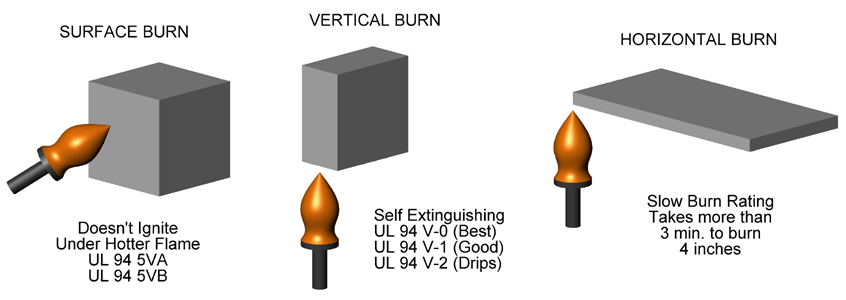
The horizontal burning test evaluates the burning rate of materials and the extent of burning when exposed to a horizontal flame. This test helps determine the flammability of materials and their ability to spread fire horizontally for different material thicknesses. The evaluation result of this test is either pass or fail.
This test applies to plastic materials commonly used in the manufacture of enclosures, structural components, and insulators in electronic products.
B. Vertical Burning Test (UL94 – V)
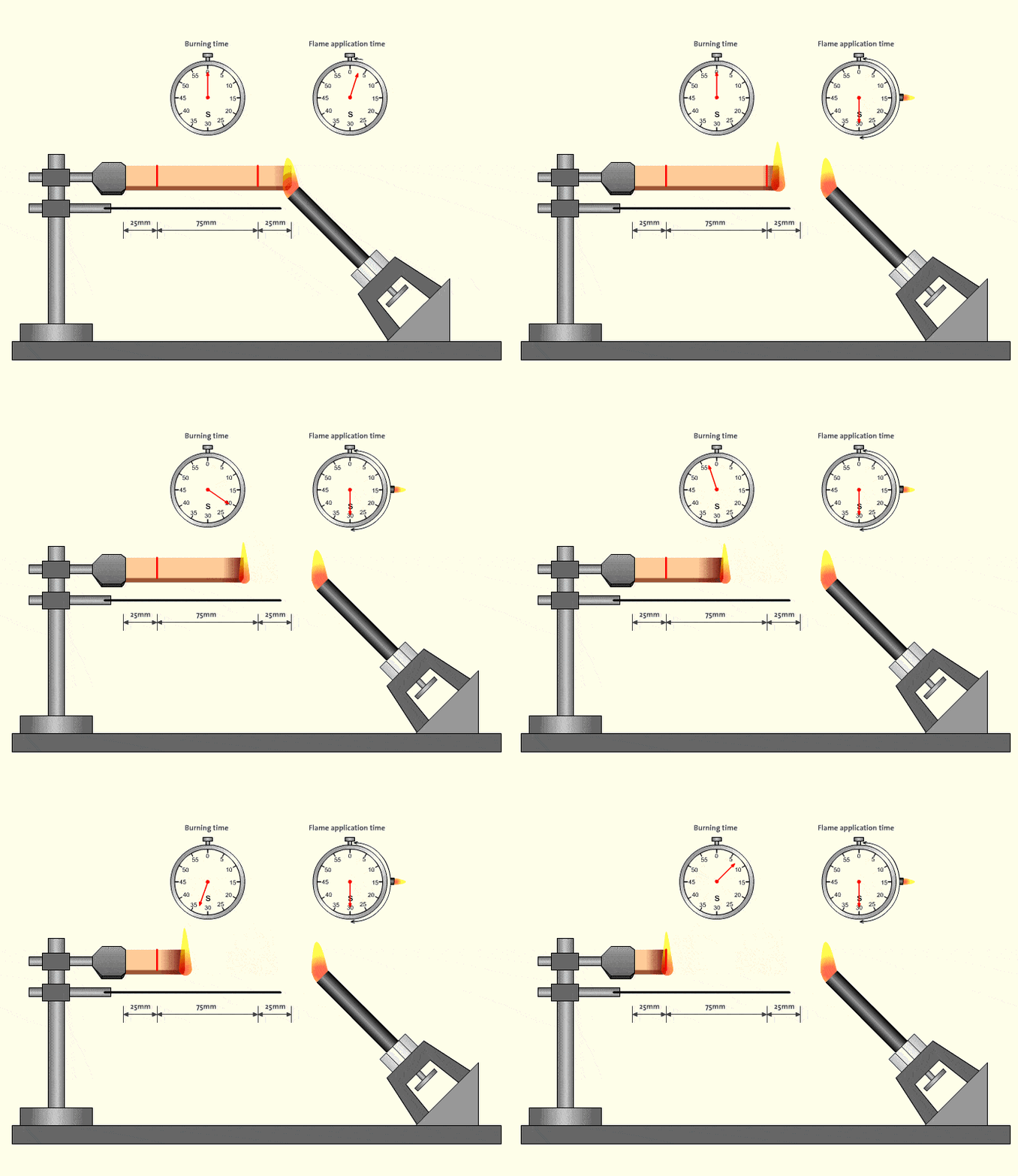
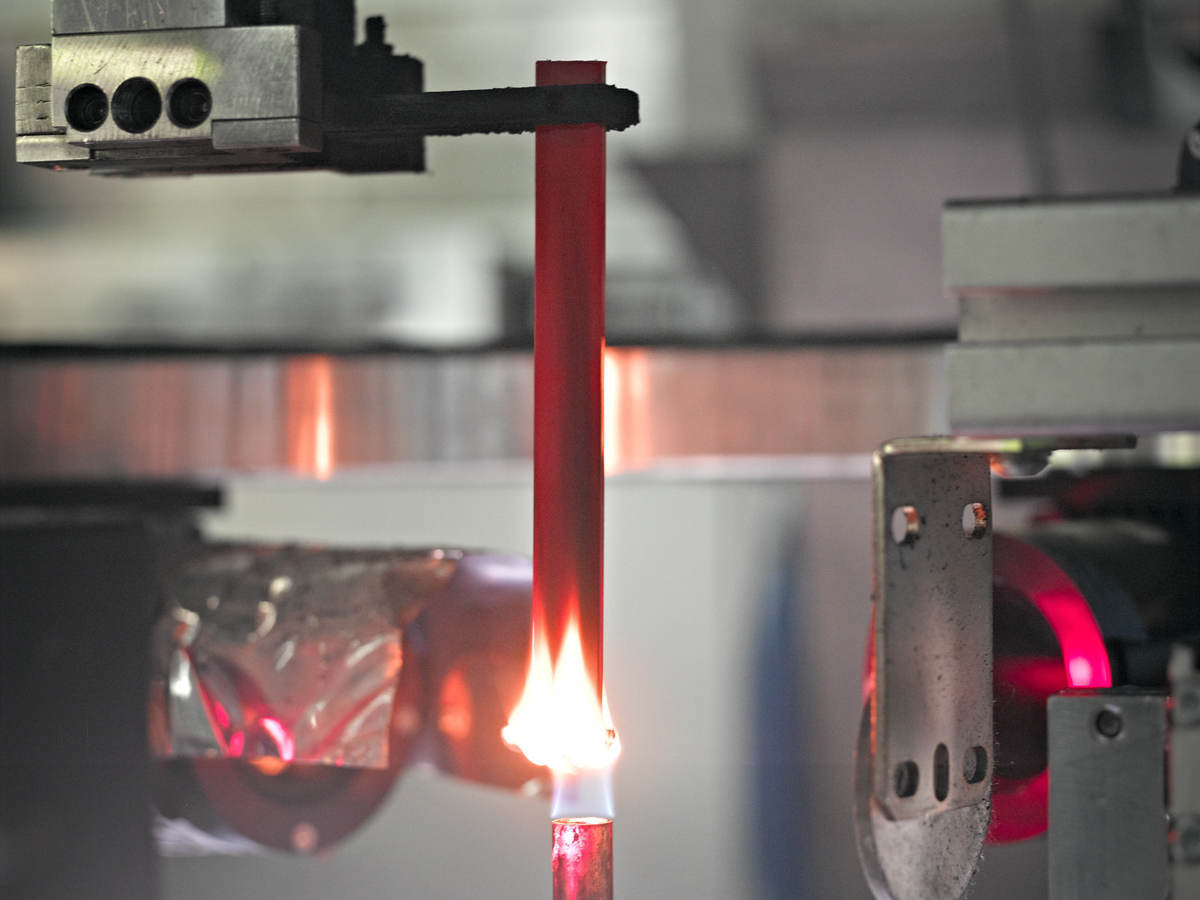
The vertical burning test is designed to evaluate the burning characteristics of plastic materials when exposed to a vertical flame. The material's performance is assessed based on its burning characteristics, such as the time it takes for the flame to extinguish after the ignition source is removed, the afterglow time (red glow after the flame extinguishes), and the dripping behavior.
This test has 3 evaluation levels: V-0, V-1 and V-2.
This test applies to plastic materials commonly used in the manufacture of enclosures, structural components, and insulators in electronic products.
C. Surface Burning Test (UL94 – 5V)
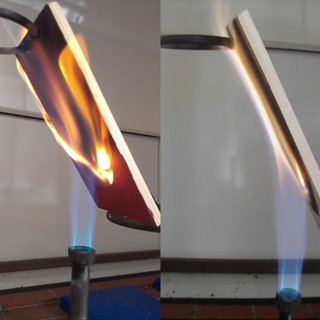
In the surface burning test, a flame is applied to the surface of the test sample, and then its self-extinguishing capability is evaluated after 5 ignitions. This test also assesses the formation of holes on the material's surface.
The evaluation is divided into 2 levels: 5VA and 5VB.
D. Thin Material Vertical Burning Test (UL94 – VTM)
This method is used to determine the flammability of thin materials, such as film. This method is applied to materials that do not pass the UL94 V test. The test evaluates the burning time, afterglow time, and dripping behavior of the burning sample.
The evaluation results correspond to 3 levels: VTM-0, VTM-1, VTM-2.
E. Foamed Material Horizontal Burning Test (UL94 – HBF)
This test is used to evaluate the flammability of low-density foamed materials, such as sound insulation materials. This test evaluates the burning time, dripping behavior, and flame spread area.
The evaluation is divided into 3 levels: HBF, HF-1 and HF-2.
III. Criteria for classifying flame retardancy
There are 12 flame retardancy classifications according to UL 94, assigned to materials based on the results of the 5 tests. These classifications, listed in decreasing order of flame retardancy, are:
- UL 94 – 5VA: Afterburn and afterglow time after the 5th ignition is less than 60s, no flaming drips, no holes formed on the surface.
- UL 94 – 5VB: Afterburn and afterglow time after the 5th ignition is less than 60s, no flaming drips, holes formed on the surface.
- UL 94 – V0: Burned for 10s. Afterburn time after each ignition is less than 10s, no flaming drips.
- UL 94 – V1: Burned for 10s. Afterburn time after each ignition is less than 30s, no flaming drips.
- UL 94 – V2: Burned for 10s. Afterburn time after each ignition is less than 30s, with flaming drips.
- UL 94 – HB: Burned for 30s. Flame spread length within 1 minute is less than 40mm for samples with thickness 3-13mm; and less than 75mm for samples with thickness less than 3mm.
- UL 94 – HF1: Burned for 60s. Afterburn and afterglow time after each ignition is less than 30s, flame spread length is less than 60mm, no flaming drips.
- UL 94 – HF2: Burned for 60s. Afterburn and afterglow time after each ignition is less than 30s, flame spread length is less than 60mm, with flaming drips.
- UL 94 – HBF: Burned for 60s. Burning rate is less than 40mm in 1 minute, flame and afterglow are extinguished before the 125 mm mark.
- UL 94 – VTM0: Burned for 3s. Afterburn time after each ignition is less than 10s, no flaming drips.
- UL 94 – VTM1: Burned for 3s. Afterburn time after each ignition is less than 30s, no flaming drips.
- UL 94 – VTM2: Burned for 3s. Afterburn time after each ignition is less than 30s, with flaming drips.
(Read more: Flame Retardancy Standards for Plastics)