Plastics are used in a variety of products, from food packaging to children's toys. Identifying safe plastic types is crucial to ensure consumer health and safety. By recognizing safe plastics, consumers can make informed choices about the products they use and reduce the risk of exposure to harmful substances.
I. What makes plastic safe for health?
Safe plastic is a type of plastic that does not leach harmful chemicals into food or beverages, is not made with toxic materials, and can be recycled.
II. How to identify safe plastic types
1. Identifying safe plastic types based on recycling codes
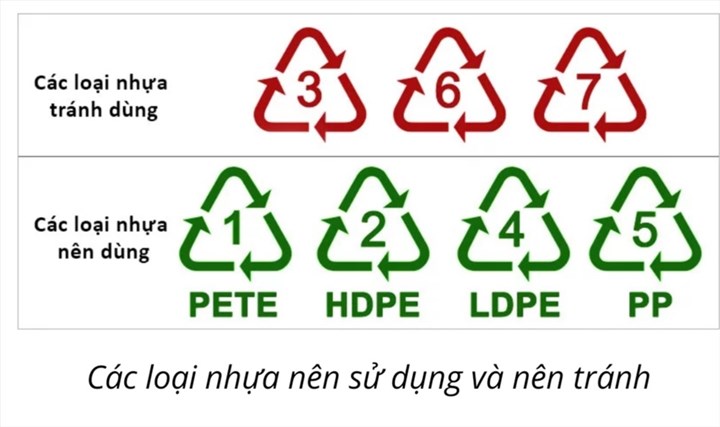
The recycling code, also known as the material identification code, is the number inside the recycling symbol on the bottom of a container. Numbers range from 1 to 7, and each number corresponds to a different type of plastic. Generally, numbers 1, 2, 4, and 5 are considered safe for food and beverage use, while numbers 3, 6, and 7 should be avoided when possible.
a. Safe plastic types
- Plastic #1 – PET Plastic (Polyethylene terephthalate) : mainly used for manufacturing beverage bottles. PET plastic is safe, however, PET plastic should not be reused; do not use for hot water or food.
- Plastic #2 – HDPE Plastic (High-density polyethylene) : used for milk jugs, detergent bottles, and plastic bags. HDPE is a highly safe plastic with high durability, good heat resistance, and good chemical resistance. HDPE is recommended for long-term food storage.
- Plastic #4 – LDPE Plastic (Low-density polyethylene) : used for food storage bags, nylon gloves, and some types of plastic wrap. LDPE is safe for use with food. LDPE plastic is chemically inert but has poor heat resistance, so limit exposure to high temperatures.
- Plastic #5 – PP Plastic (Polypropylene) : used for food containers, and soft bottles. PP plastic is safe for health. PP can withstand temperatures up to 150 – 170oC.
b. Unsafe plastic types (avoid for food contact)
- Plastic #3 – PVC Plastic (Polyvinyl chloride) : sometimes used in food packaging. PVC can release harmful chemicals such as phthalates and dioxins.
- Plastic #6 – PS Plastic (Polystyrene) : often used in disposable cups and food containers, can release styrene, which has been linked to cancer and reproductive issues when exposed to high temperatures.
- Plastic #7 – PC Plastic (Polycarbonate) and other common plastics : PC plastic is often used to produce plastic jugs and food storage containers. PC plastic can release bisphenol-A (BPA), which has been linked to hormonal imbalance and other health issues when exposed to high temperatures. Other plastics in group #7 require careful identification by other methods for safe use.
2. Identifying safe plastic based on intended use
In addition to checking the recycling code, it's important to consider the type of plastic and its intended use. Some plastic products also have symbols guiding users on proper use:
- Microwave symbol (text Microwave Safe): can be used in the microwave.
- Glass and fork symbol : safe for food contact.
- Snowflake symbol : can be used in the freezer.
- Dishwasher symbol : dishwasher safe.

3. Products labeled BPA-free
Another way to identify safe plastic is to look for products labeled BPA-free. BPA (bisphenol A) is a chemical commonly found in plastics that has been linked to health problems, so choosing BPA-free products can help you reduce your exposure to this harmful chemical.
(see more: Symbols on plastic products)