Plastic products have become an indispensable part of our daily lives, with various applications ranging from packaging materials to household items. Many different symbols are often printed on the bottom of plastic products, but not everyone understands their meaning and purpose. Through this article, let's join CPI Plastic to decode the meaning of symbols on plastic products to understand and use them correctly, protecting your family's health.
I. Common types of symbols on plastic products
Symbols printed on plastic products aim to provide useful information to help consumers use them correctly and ensure safety.
There are 3 common types of symbols including:
- Recycling symbols.
- Material identification codes.
- Safety and usage instruction symbols.
A. Meaning of recycling symbols
Recycling symbols hold significant meaning in waste management. They provide information about recyclability, responsibility, and biodegradability.
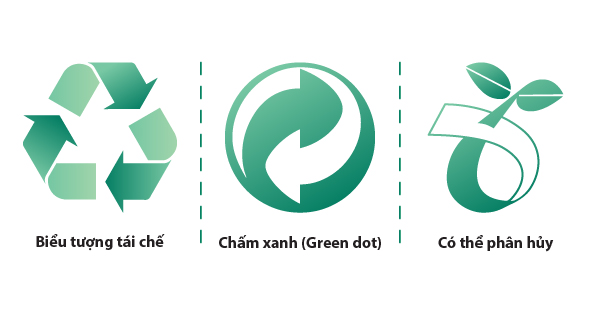
1. The Mobius Loop symbol
The most common symbol, often referred to as the "recycling symbol," is accurately called the "Mobius Loop." It consists of three arrows forming a triangle, indicating that the product or packaging can be recycled. However, it does not guarantee that it will be accepted for recycling in all areas. The Mobius Loop serves as a reminder for consumers to check their local recycling guidelines before discarding the product.
2. The "Green Dot" symbol
The "Green Dot" symbol is an internationally recognized mark. This symbol does not mean that the product is recyclable. Instead, it indicates that the manufacturer has made a financial contribution to a recycling scheme. The Green Dot symbol is primarily used in Europe and serves as a reminder of the producer's responsibility in managing waste generated by their products.
3. The "Compostable" symbol
The Compostable symbol has become increasingly popular worldwide in recent years thanks to advancements in biodegradable plastic development. It represents products that can decompose into compost, contributing to an organic waste stream. This symbol ensures that compostable items are processed correctly and do not harm the environment.
B. Material identification codes
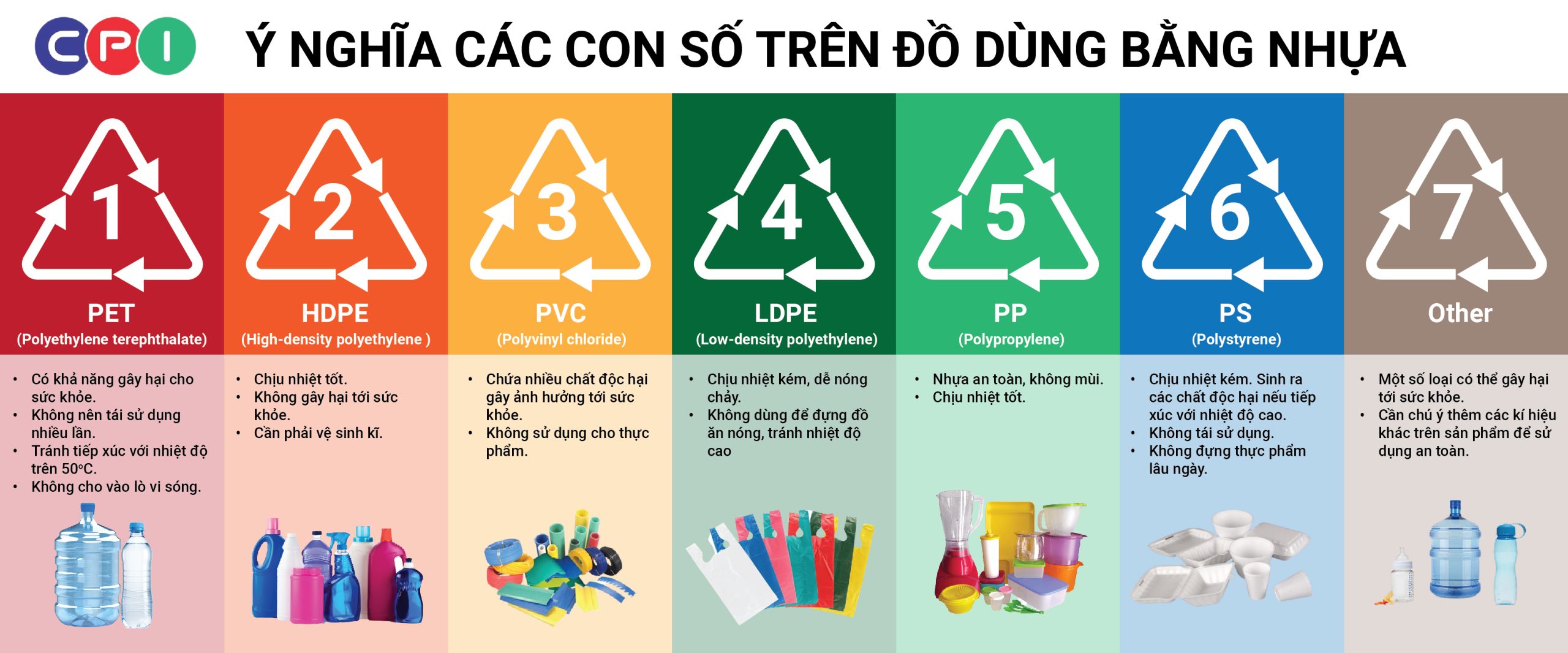
Material identification codes (RIC) take the form of a recycling symbol (3 arrows forming a triangle) containing a number inside. This symbol does not indicate how many times the plastic has been recycled, as many mistakenly believe. Instead, the symbol is used to differentiate various types of plastic based on their characteristics.
Each number represents the chemical composition of the plastic, based on which there are different recycling and processing methods. Users can also rely on this symbol to distinguish what type of plastic a product is made from.
 No. 1 – PET Plastic
PET (Polyethylene terephthalate) plastic, also known as plastic No. 1, is one of the most common types of plastic used to produce food and beverage packaging. PET is used for rigid, transparent plastic bottles often used for packaging water, soda, and food. This type of plastic is lightweight, durable, and has good gas barrier properties. It is widely recycled and used to produce new bottles and polyester fibers.
To ensure user health, please note:
- PET plastic should not be reused.
- Do not use it to hold water or food at temperatures above 50oC.
- Do not put it in the microwave.
No. 2 – HDPE Plastic
HDPE (High-density polyethylene) plastic, also known as plastic No. 2, is a rigid plastic used to produce rigid, opaque plastic containers. HDPE is commonly used for bottles containing cleaning products, cosmetics, and personal care items; it is also used for milk jugs, crates, and plastic buckets. The rigid nature of HDPE plastic makes it ideal for wear-resistant plastic products. HDPE also has chemical resistance and excellent moisture barrier properties. It is recycled into various products, including plastic lumber and pipes.
HDPE plastic can withstand temperatures up to 110oC and can be used in a microwave at low power (<800W). When reusing, it is important to clean thoroughly because this type of plastic is difficult to clean and can easily retain residual bacteria that may be harmful to health.
No. 3 – PVC Plastic
PVC (Polyvinyl chloride) plastic, or plastic No. 3, is often used for flexible and rigid plastic products, such as pipes, vinyl flooring, and window frames. PVC has good chemical resistance but is not easily recycled. It is commonly used in the construction and automotive industries.
PVC plastic is a cheap type of plastic that contains harmful additives that can affect health. Therefore, it is important to note:
- Do not use for food wrapping.
- Do not put in the microwave.
- Do not buy toys made from PVC plastic for children.
No. 4 – LDPE Plastic
LDPE (Low-density polyethylene) plastic, or plastic No. 4, is a soft plastic, often used to produce plastic bags, candy wrappers, and cosmetic bottles. LDPE has good moisture and chemical resistance, making it suitable for packaging applications. LDPE is one of the most commonly recycled plastics.
Note: Do not put LDPE plastic in the microwave as it melts easily and can be harmful to health.
No. 5 – PP Plastic
PP (Polypropylene) plastic, plastic No. 5, has many applications in daily life, used for rigid and flexible plastic products, including food containers, automotive parts, and packaging materials. PP has excellent heat resistance and is often recycled into battery casings, signal lights, and fibers.
PP plastic is a safe, odorless type of plastic that can be used for storing food in the refrigerator. PP plastic can withstand temperatures up to 170oC, so it can be used in the microwave.
No. 6 – PS Plastic
Plastic No. 6, PS (Polystyrene) plastic, is an easy-to-process, easy-to-color plastic. PS plastic is often used to produce foam food containers, plastic cups, plastic bowls, and snack trays for single use. In addition, PS plastic is also used to produce electronic devices such as sockets, switches, or CDs.
PS plastic is very prone to deformation and releases harmful substances when exposed to temperatures above 80oC. Therefore, PS plastic should not be used to hold boiling water, hot food, or heated in a microwave. Furthermore, it should not be used to hold strong acids or strong alkalis. For these reasons, this type of plastic is not permitted for long-term storage of food or beverages.
No. 7 – Other
Plastic No. 7 includes other types of plastic, with PC plastic and Tritan plastic being the most common.
+ PC plastic is often used to produce water bottles, baby bottles, and food containers. This type of plastic contains BPA, a substance that can cause cancer, however, BPA is safe at permitted levels.
+ Tritan plastic has the transparency of glass, is break-resistant, and ensures user health safety, often used for water bottles, food containers, drinking glasses, etc.
When using products classified under plastic No. 7, you should choose products labeled with "BPA free" – ensuring safety and no cancer-causing substances.
C. Safety and usage instruction symbols
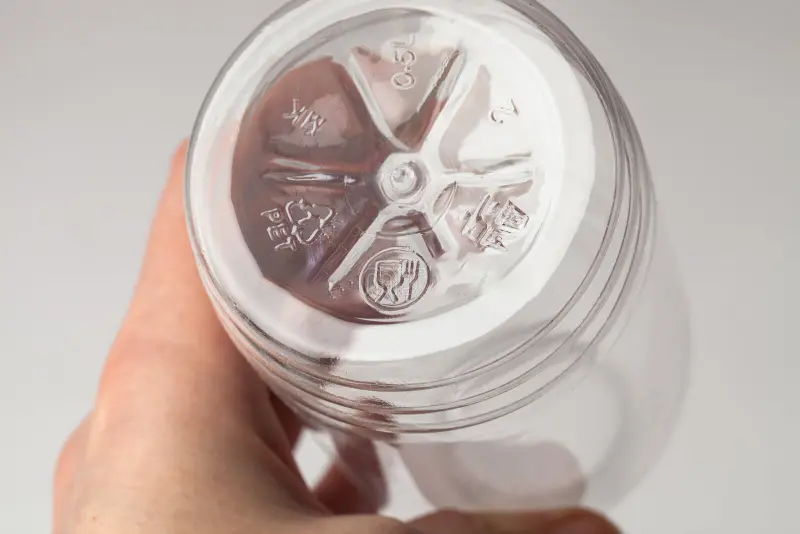
In addition to the number symbols distinguishing plastic types, plastic products often have other symbols printed on them to ensure safe usage and protect health:
Safety symbols on plastic products play an important role in consumer protection. These symbols provide crucial information about potential hazards associated with the product, serving as a visual reminder of the precautions to take when using the product.
- Microwave safe symbol (text Microwave Safe): can be used in the microwave.
- Cup and dish symbol: safe for food contact.
- Snowflake symbol: freezer safe.
- BPA free: Does not contain BPA – a cancer-causing substance.
- Dishwasher safe symbol: can be used in the dishwasher.
Above is shared information about common symbols printed on plastic products to help you better understand products made from plastic. Through this article, we hope you can grasp how to use and distinguish good plastic products that are safe for the health of all family members.