The Vietnamese plastic packaging industry is currently facing significant pressure and fierce competition in the era of Industry 4.0. This is due to an increasing number of domestic companies gradually falling into the hands of major foreign enterprises such as those from Thailand, South Korea, etc.
With its high growth rate, the Vietnamese plastic packaging industry has proven to be one with extremely high development potential, trailing only telecommunications and textiles. Therefore, the plastic industry has been regarded as a dynamic sector within Vietnam's economy.
However, despite such development speed, the Vietnamese plastic packaging industry still faces immense pressure and competition from numerous foreign plastic manufacturing enterprises operating in Vietnam.
Today's article will introduce and analyze an overview of the plastic packaging industry in Vietnam at the current time, and also analyze its development potential, as well as the outlook for the plastic packaging industry in 2020.
Overview of Vietnam's Plastic Packaging Industry
Overall, the plastic industry is extremely essential in all aspects of life today. Currently, the industry reached a scale of 9.3 billion USD in the first two quarters of 2019 alone.
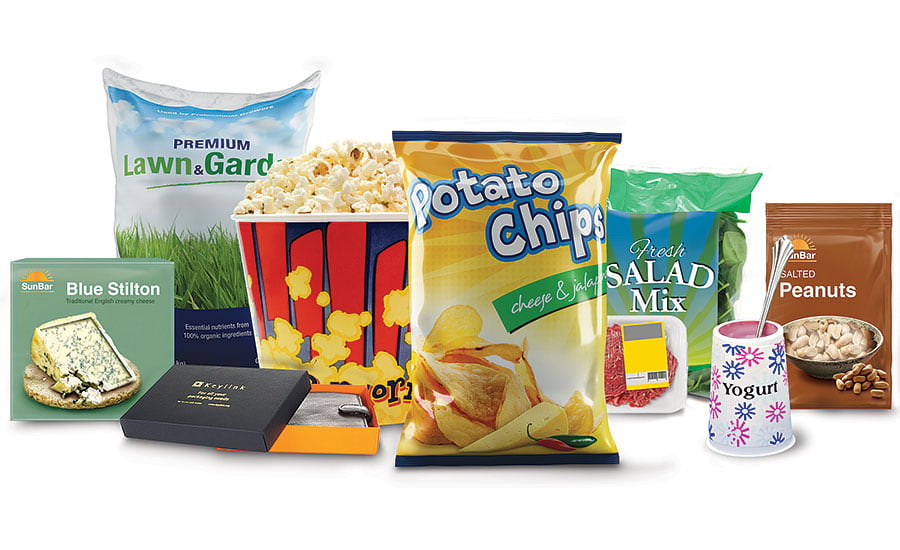
The structure of the plastic packaging industry consists of 38% packaging plastics, 18% construction plastics, 29% household plastics, and finally 15% technical plastics. Among these, packaging plastics and household plastics, which have low-profit margins, are gradually decreasing in proportion as required by the Government.
Shortcomings in Production
Currently, across all the aforementioned plastic sectors, we can only self-produce raw materials at a level of 80%, with the remaining portion needing to be imported from China to meet sufficient production output demands.
This situation is similar with machinery, science, and technology. Over 90% of current plastic production machinery comes from abroad, with China accounting for up to 82%.
At the end of October 2019, SCG Group announced its business results for the first nine months with 11.2 billion USD. Specifically for the Vietnamese market, SCG's sales revenue reached 39 million USD in Q3/2019, an 18% increase compared to the same period last year.
The above results show sales revenue growth across all business units. However, profits in the quarter decreased primarily due to rising raw material and energy costs.
The most fundamental issue in Vietnam's plastic industry is the shortage of domestic raw materials, leading to a significant dependence on imported plastics. Specifically, the plastic industry will soon require 8.2 million tons of plastic per year. However, after considering all planned projects, domestic production can only supply 2.34 million tons, meeting only 30% of the demand.
High Pressure and Competition
At the conference "Plastic - Printing - Packaging Industry in Vietnam," experts stated that due to lower production costs in Vietnam compared to other countries in the region such as Singapore, Thailand, etc., coupled with the rapidly increasing demand for packaging in the food and beverage industry, foreign corporations, especially from China, have invested heavily.
This has led to famous Vietnamese plastic brands gradually falling into the hands of Thai, Korean, and Japanese enterprises, among others. The market share of domestic enterprises is increasingly shrinking, especially for those with limited financial resources, design capabilities, and technological innovation, while labor costs are steadily rising.
For example, the market share for high-quality packaging currently required in the food packaging sector remains concentrated among FDI companies such as Tetra Pak from Sweden, Combibloc from Germany, etc.
Development Potential and Outlook of the Plastic Packaging Industry in 2020
Domestic plastic consumption is currently quite low compared to the global and Southeast Asian average. Plastic is also a supporting industry for countless businesses due to its high applicability. Therefore, the food processing industry is projected to grow by 10.9% in 2020, and real estate by 6% over the next 4 years.
Furthermore, with a series of Free Trade Agreements signed, import tariffs for the EU, Japan, Korea, etc. – countries with very large plastic product consumption economies in Vietnam – will decrease to 0-5%. This will help maintain high growth in net exports.
Moreover, with the advantage of human resources, political stability, and FDI inflow from other sectors, coupled with the impact of trade wars, the domestic plastic industry promises to replace China as a world leader.
Regarding the dependence on foreign enterprises for raw material production, this issue will be resolved in the short term. This is because oil prices are assessed as stable, and the Nghi Son and Long Son petrochemical projects are on track to increase capacity to replace imported goods.
Along with the boom of the Industry 4.0 revolution, in the next 5 years, "green packaging" technology will develop to save non-renewable resources and reduce emissions, becoming dominant and aligned with the trend of shifting the growth model from "brown to green" for sustainable development goals, protecting consumer rights and the environment.
Source: baobibinhminh.net